






How Do Dogs Get Ear Infections (And How to Help)?

From vet visits to daily playtime, you want to provide your dog with everything they deserve to live their best, healthiest life. So, when your furry friend begins to scratch or act out of the ordinary, it makes your ears perk up: could it be an ear infection?
Learn about the kinds of ear infections, common signs to look for, and how to help prevent ear infections in dogs.
Types of Dog Ear Infections
Before we answer the question of how dogs get ear infections, it’s important to understand the three common types of infections: inflammation of the ear canal, the middle ear, and the inner ear.
The area of the ear most frequently infected is the canal because it faces outward. If it is not cleaned regularly, bacteria can build up in the ear canal and form an infection. If your dog’s outer ear infection goes undetected or untreated, it could spread to the middle ear and eventually the inner ear.

Spotting the Signs
The sooner you can identify an ear infection, the easier it will be to help your furry friend feel better. Here are symptoms to look for so you can quickly help a dog with an ear infection.
Sign #1: Redness and Swelling
The most common cause for redness and swelling on the ear flap is a bacterial or yeast infection. Ensure you are checking under your dog’s ear flaps regularly so you can spot any potential issues early on.
Sign #2: Unusual Odor
A mild odor from dirt or a small amount of wax in your dog’s ear is common. However, if the commonly known “corn chip” smell is accompanied by redness, discharge, or excessive wax and moisture, it could be an ear infection. It is recommended to call your vet if your dog’s ear smell is present and paired with any other irritation signs or symptoms.
🐾 Related: Dog Ear Types, Common Issues & How to Clean
Sign #3: Itching and Discomfort
Do you notice your furry friend scratching their head excessively? If you touch your dog’s ear, do they shy away from you? Itching and discomfort are two of the most common symptoms to help detect an ear infection.
.jpg)
Sign #4: Shaking or Tilting Their Head
Did you know that even dogs with less floppy ears may shake or tilt their head? If your dog is doing this excessively and shows additional symptoms, it might be time for a trip to the vet to check for an ear infection.
Sign #5: Discharge and Scabs
While a small amount of discharge is normal, increased discharge accompanied by irritation, foul odor, and discomfort could indicate an ear infection. Reach out to your vet for guidance. Leaving this untreated can lead to more serious issues such as inflammation of the ear, and in extreme cases, hearing loss or balance issues.
Sign #6: Appetite Changes
If it looks like your furry friend is eating less or not at all, they could be suffering from an ear infection. The pain from the infection can become worse when dogs chew, which is why they might avoid eating.

Causes of Dog Ear Infections
From experiencing environmental allergies to spending time outdoors, dogs can get ear infections from a range of places and activities. Learn more about few common causes of ear infections in dogs:
Cause #1: Foreign Objects
Dogs love to explore, so it’s only natural that debris such as dirt or sand might make their way into your furry friend’s ear. Check and wipe their ears regularly to ensure they are all clear.
Cause #2: Ear Mites
Ear mites—which feed on the wax and oils inside the ear—are less common in dogs than cats, but still another potential cause for an ear infection. Excessive scratching, ear discharge, redness and irritation, strong odors, and hair loss are all signs of ear mites. If you detect ear mites, use an ear mite treatment as soon as possible.
Cause #3: Excess Moisture
Many dogs enjoy swimming, but too much water in their ears could lead to trouble. A moist environment in the ear canal will attract bacteria and yeast. After swimming or bath time, ensure your dog’s ears are dry and apply some ear powder to help absorb excess moisture.
Cause #4: Allergies
Dogs can have a range of allergies, from ingredients in their food to environmental factors like trees or pollen found in nature. If irritated, these allergy symptoms could lead to excessive or chronic itching of the ear. If you find that your dog has allergies and is scratching more than usual, consult your vet for further action.
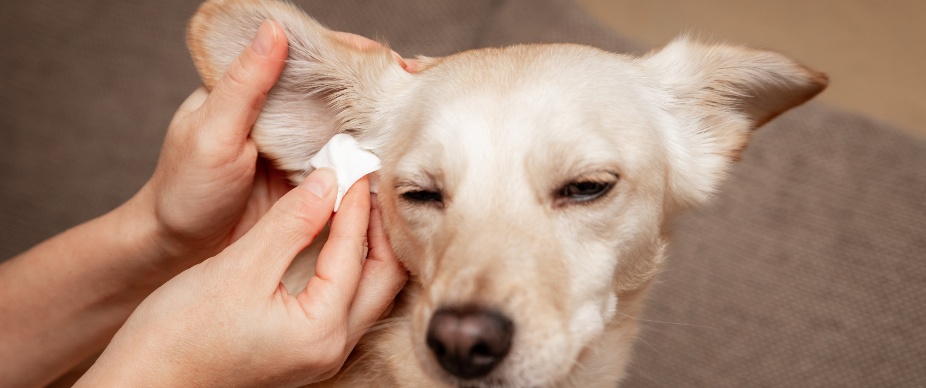
Loud and Clear
Now that you understand how dogs get ear infections, you can continue to provide your dog with the best grooming and care for the cleanest ears. Stock up on wipes, powders, and more to help prevent an ear infection in your dog.
FAQs About Dog Ear Infections
How do dogs get ear infections?
Dogs get ear infections when a buildup of bacteria, yeast, or mites affect the outer layer of the ear canal.
What are some signs of an ear infection in dogs?
Redness or swelling, unusual odor, itching and pain, and excess discharge are all common symptoms of ear infections in dogs.
What causes dog ear infections?
Foreign objects, ear mites, excess moisture, and irritated allergies are common causes of an infection in your dog’s ear.
How can I prevent an ear infection in my dog?
Ear infections can happen for a variety of reasons, but maintaining good ear hygiene and staying vigilant to any unusual behaviors could help detect an issue before it progresses.
